The Ecurie 69 Development Series · Chapter 1
The Small Matter of Getting In
The 2019 LM69 prototype looked the part. For the Ecurie 69, we’ve been making room for two people to get in, drive it and, with any luck, get out again.
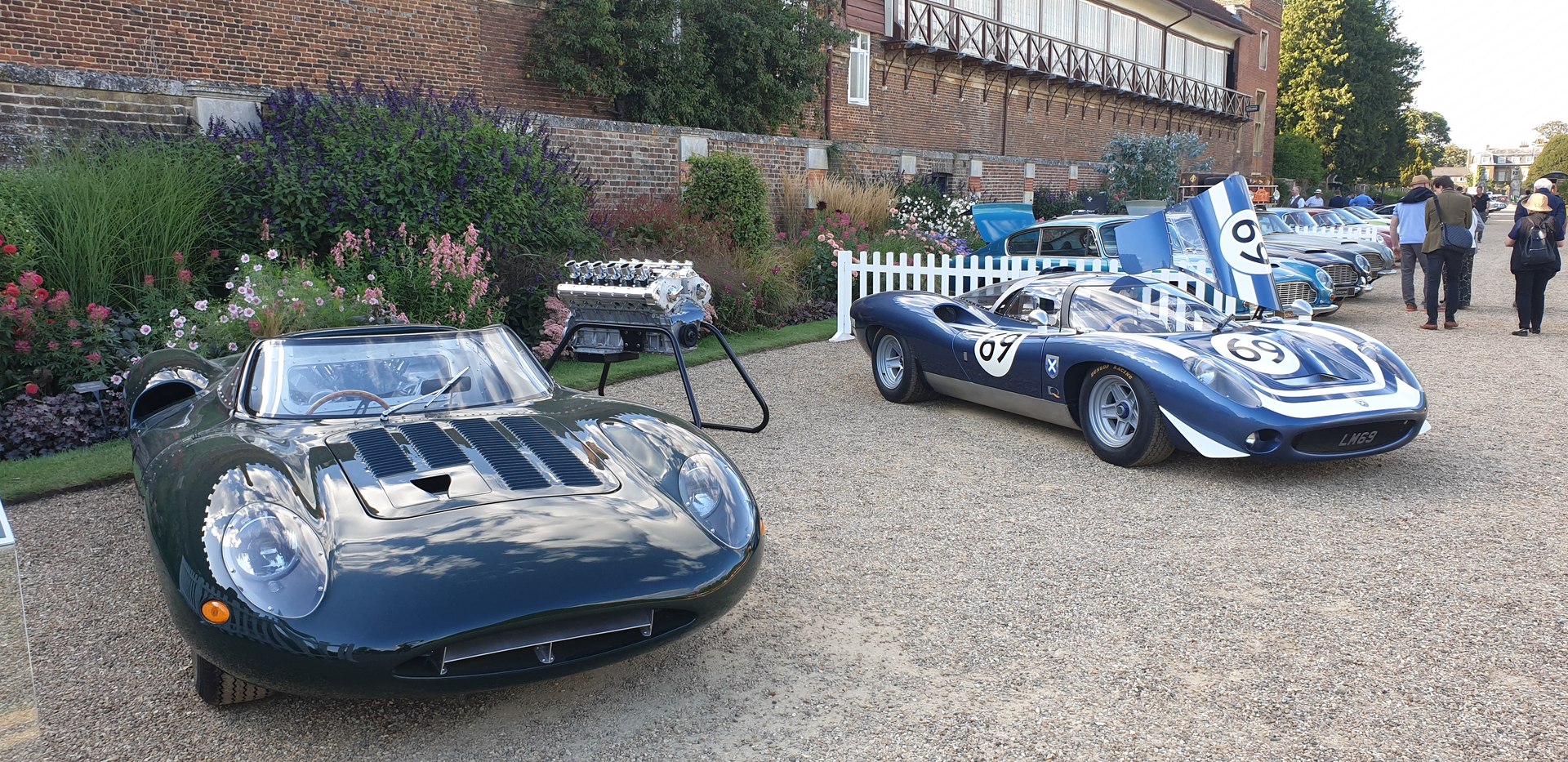
In September 2019 we took the LM69 prototype to the Concours of Elegance at Hampton Court Palace for its public debut. It was our answer to a question I’d been mulling over for years. What might Jaguar’s beautiful, unraced XJ13 have become if someone had carried on developing it for Le Mans in 1969? Give it a roof, wider tyres and that long, low tail, and you could just about picture it lining up alongside a GT40.
At Hampton Court, the prototype did exactly what we’d hoped. You could walk around it and see how the idea worked at full size. Then you could open a door and see how little of that full size had been set aside for you.
Mind your head. And your knees.
The doors swung up and forward, which looked marvellous. Below them was a broad sill, and beyond that a low bucket seat. To get in, you had to clear the sill while ducking under the roof edge and finding somewhere for your knees. Getting out involved much the same negotiations, only this time you were starting from the bottom. Once you were in, there was a certain incentive to stay there.
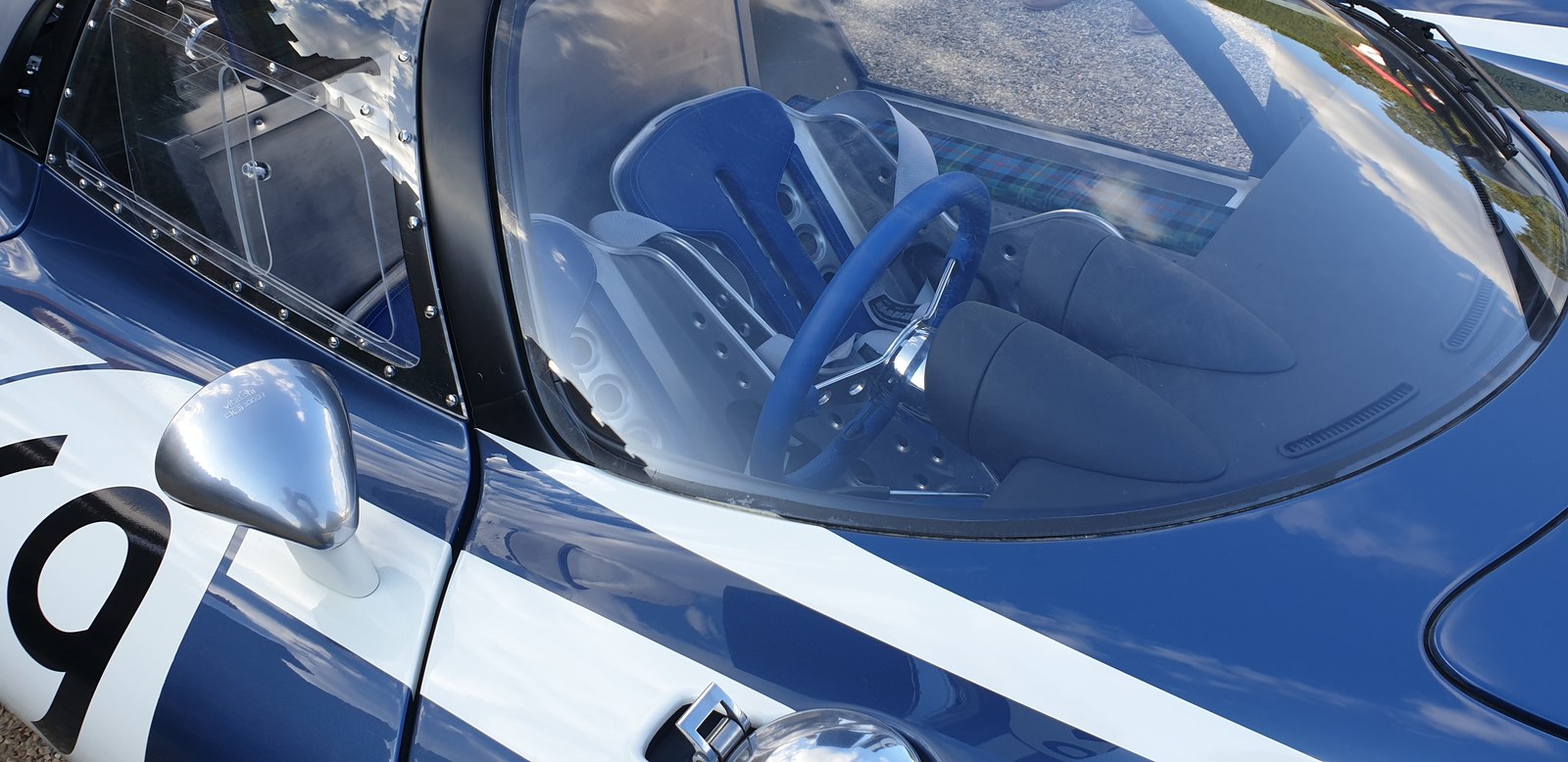
A show prototype can tell you a great deal about proportions and how a door might open. A car you’re going to use has to answer rather more questions. Can two adults sit comfortably with the doors shut? Can the driver work the pedals and change gear with a passenger alongside? Can either of them get out without a friendly hand on the elbow? Those questions are where the current Ecurie 69 work began.
Two six-footers and a rather wide sill
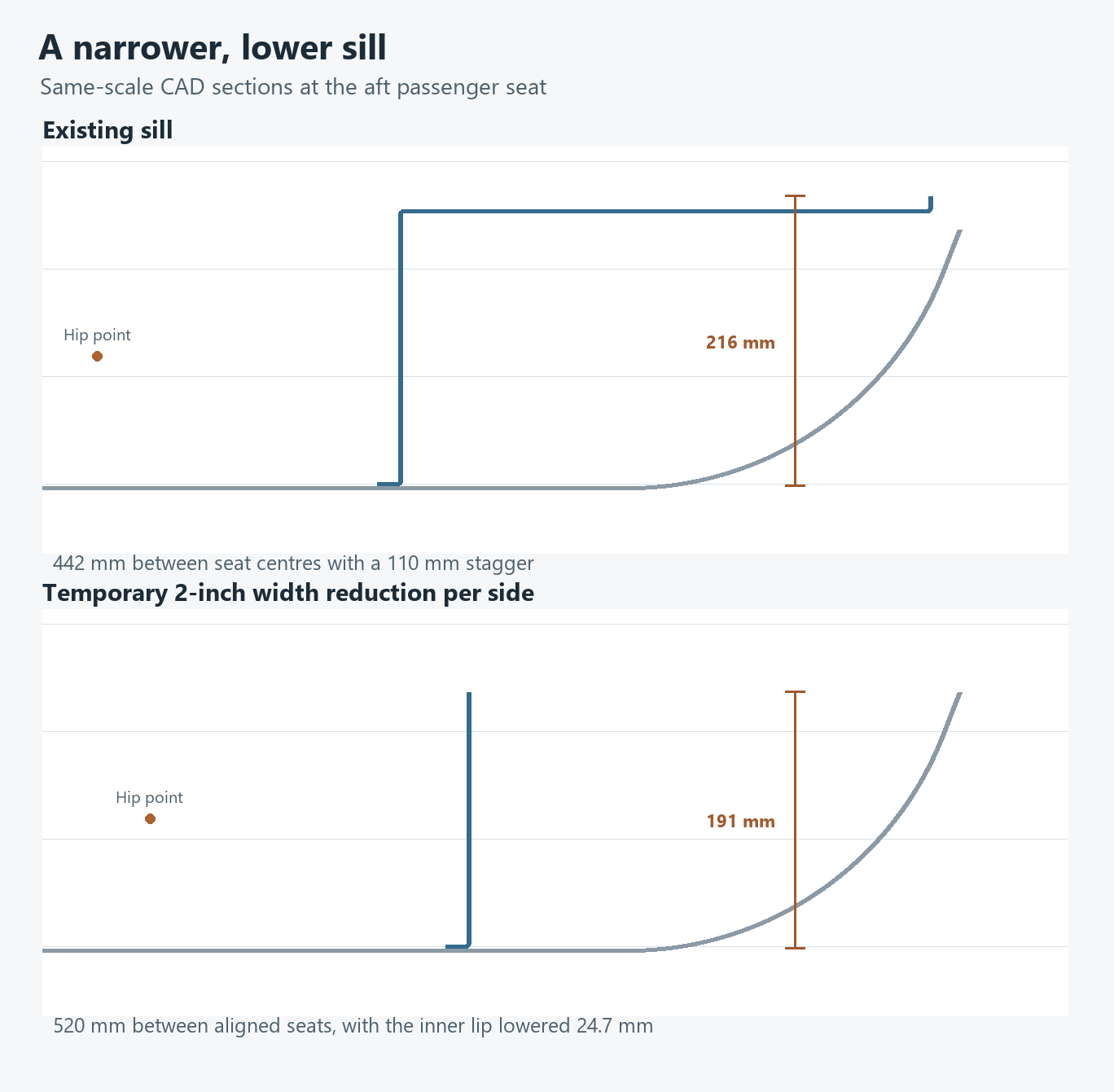
We put two six-foot occupants into the computer model. They were very patient about having their seats moved. The first arrangement with the original sills put the driver 110 mm ahead of the passenger to give their shoulders room. By moving the inner wall of each sill two inches outwards, we could put the seats side by side, with 520 mm between their centres. That left about 30 mm between the modelled shoulders.
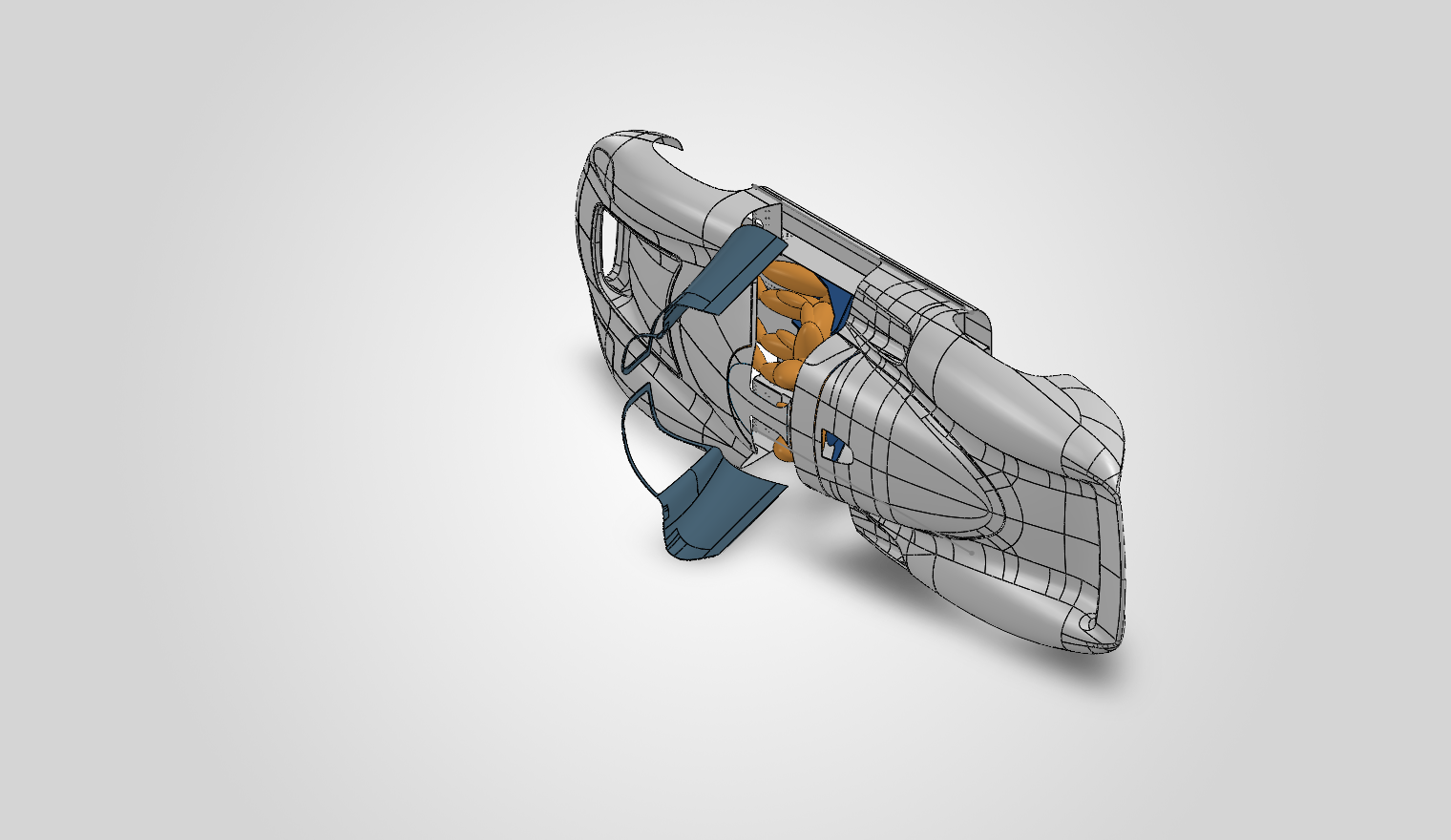
We also took nearly 25 mm off the inner lip of the sill at the doorway. The step up from the floor dropped from 216 mm to 191 mm. In the passenger study, that saved about an inch of hip lift on the way out. A straight sideways move still brought the knees into the front of the opening. The better route was to lift and swivel, with the knees tucked farther back. It’s a useful thing to know before deciding where to put the back edge of the door.
Two inches up, four inches across
In an earlier pass at the body we’d moved the rear wheel openings and tail back by 125 mm, blending the extra length into the body and engine cover. We kept that length for the cockpit trials. There was still the small matter of what happened above the seats.
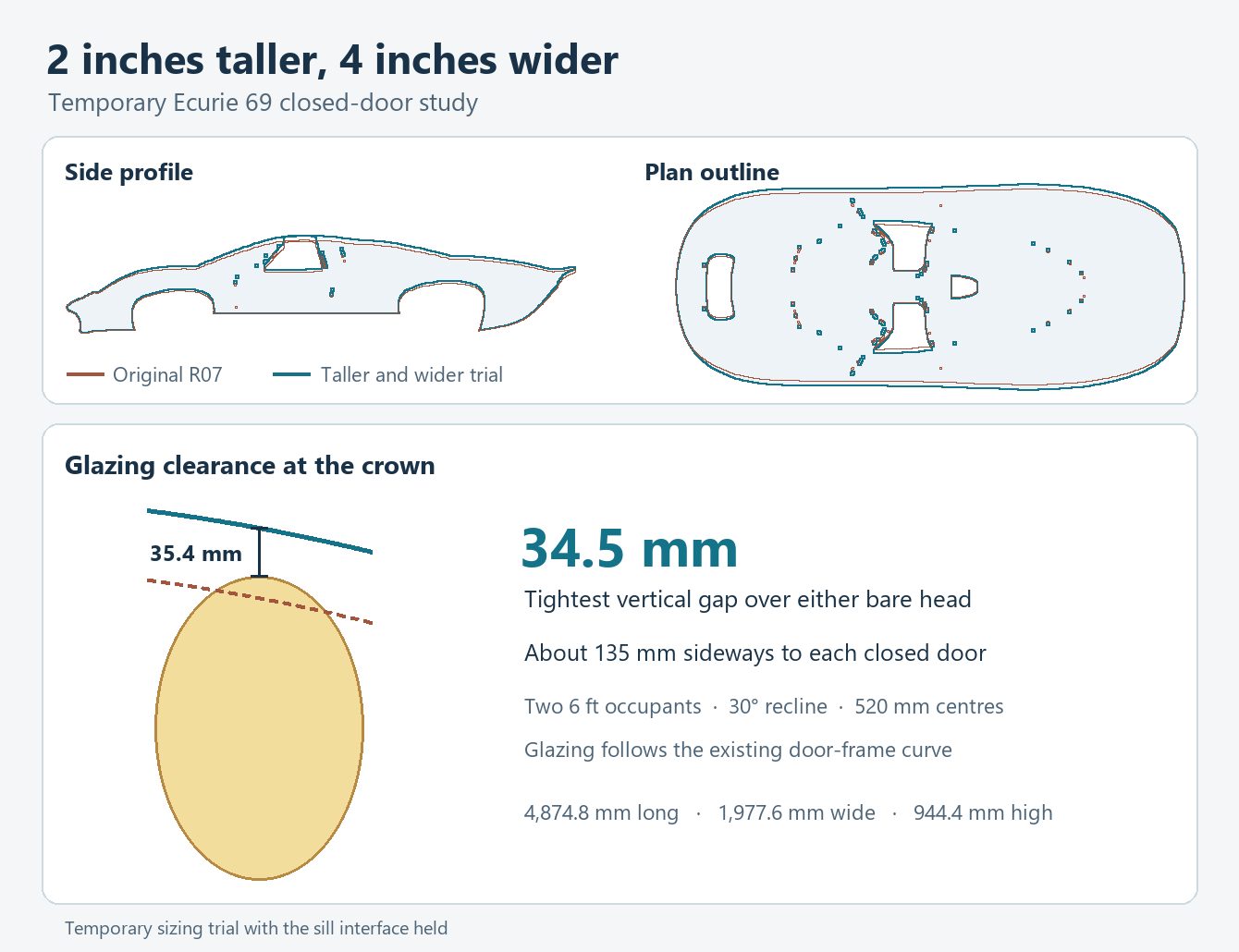
With the two occupants reclined at 30 degrees and the doors shut, their heads poked through the assumed glazing by roughly 17 mm in the original-height model. A body two inches taller and four inches wider gave us about 35 mm of bare-head clearance at the tightest point in the trial. For anyone wondering, a helmet is still owed its own turn. So are the final glazing, headlining and the occupants who’ll actually have to move around in there.
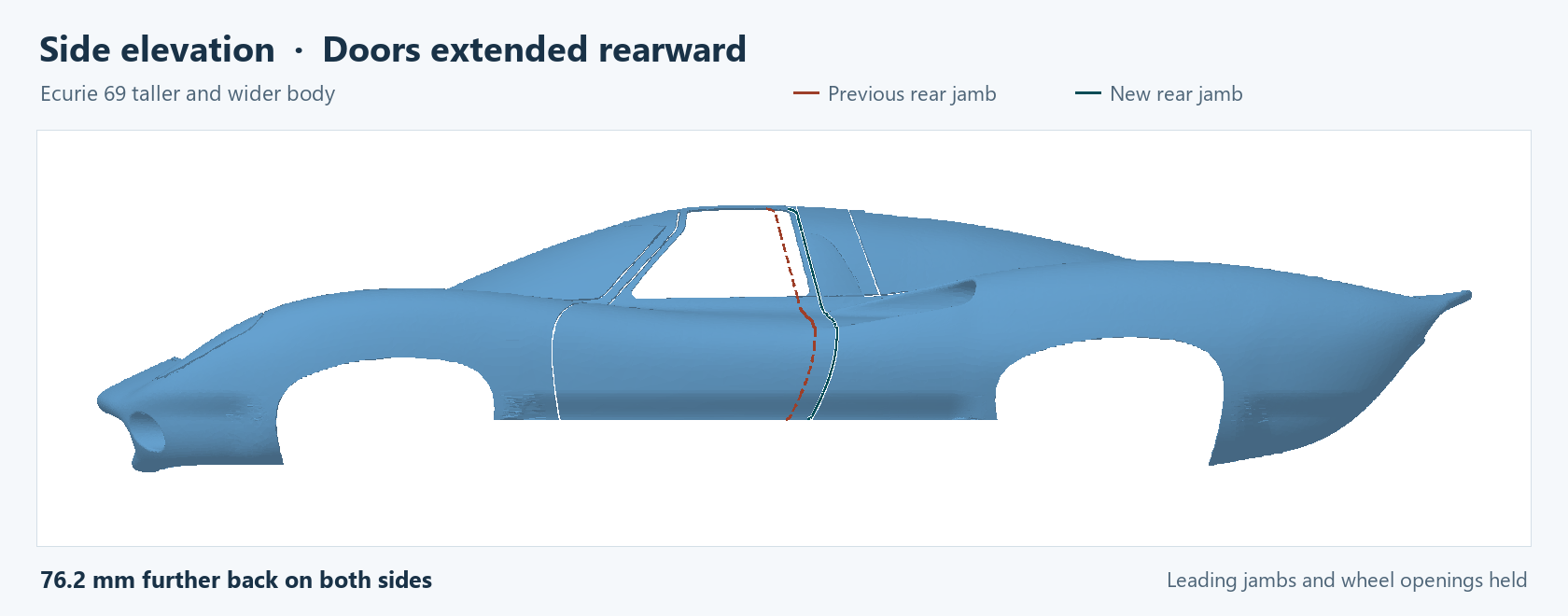
We then gave each door opening another three inches at the back. The front edge stayed put and the roof hoop moved aft with the rear jamb. That gives us more room where the passenger study suggested swivelling. In side view the car still has the low nose and long tail that made me want to build it in the first place. You have to look twice to spot where we found those inches.
What the extra room does to the chassis
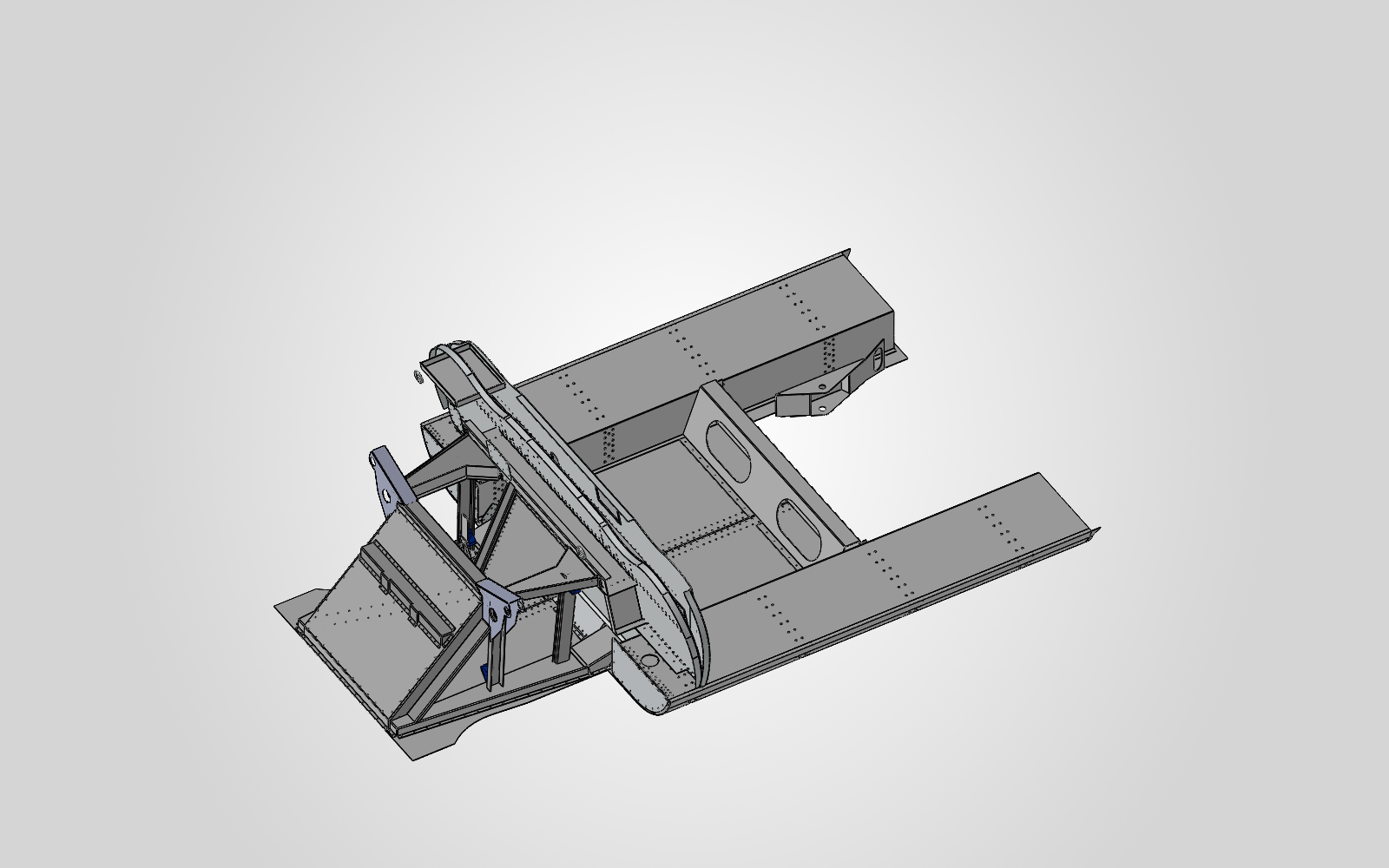
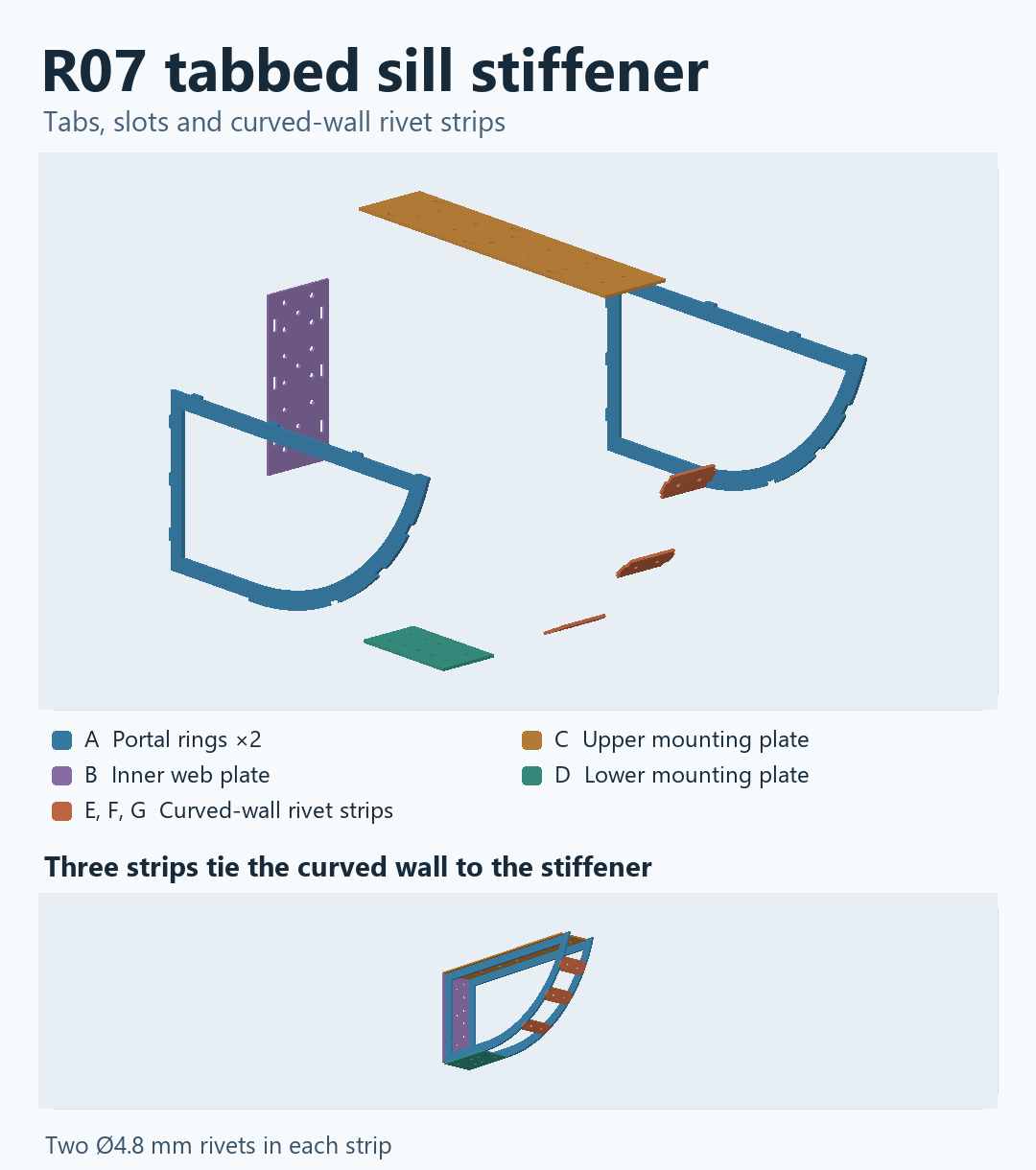
Moving a line on the body drawing is the quick bit. The sill is part of the aluminium monocoque, the structure that carries the car’s loads. Move it and you have to bring the floor, crossbrace and internal stiffeners with it. We’re designing around aluminium panels we can laser-cut, fold and assemble in the workshop. In SOLIDWORKS we’ve extended the lowered sill to meet the longer doorway and we’re checking how the front bulkhead fits under the wider shell. Even a row of rivet holes needs to land in the same place on both parts. The drill is a very expensive way of discovering that it doesn’t.
There’s a similar lesson at the gear lever. The little selector we modelled fits between the seats and the driver can reach it. The simplest route from there to the gearbox runs straight into a crossbrace. We’ve found a possible route over it, which will have to earn its keep when we fit the actual linkage. That’s the sort of detail that takes a car from looking right in the paddock to being something you can drive out of it.
On the way to 2027
The silhouette that drew people over at Hampton Court is still there, and the aim is still to put our quad-cam tera V12 behind the seats. The next questions need real seats, real door hardware and real people. I’m looking forward to asking someone to get in and drive, and to being able to leave the getting-out instructions at home.
We’re planning to reveal the Ecurie 69 in early 2027. I’ll be sharing more of the workshop work here as we get there. If you’d like to hear when the car is unveiled, register your interest in the Ecurie 69.
Next in the series, a closer look at the aluminium monocoque and how the revised body fits over it.