If you read my piece about Broadspeed’s XJ12 Coupé — the fastest car that never won — you’ll remember the kindest verdict anyone passed on it: a snoozing Labrador that could show a remarkable turn of speed if only it could be bothered to get out of bed. That line belongs to Andrew Frankel, and he finished the thought in the same Octane feature. The TWR XJ-S, he wrote, is “a slavering wolf on the hunt for its dinner”. Same 5.3-litre V12, same basic mission — and this time the story ends with silverware: a European title, a 24-hour win and a car you can still visit today.
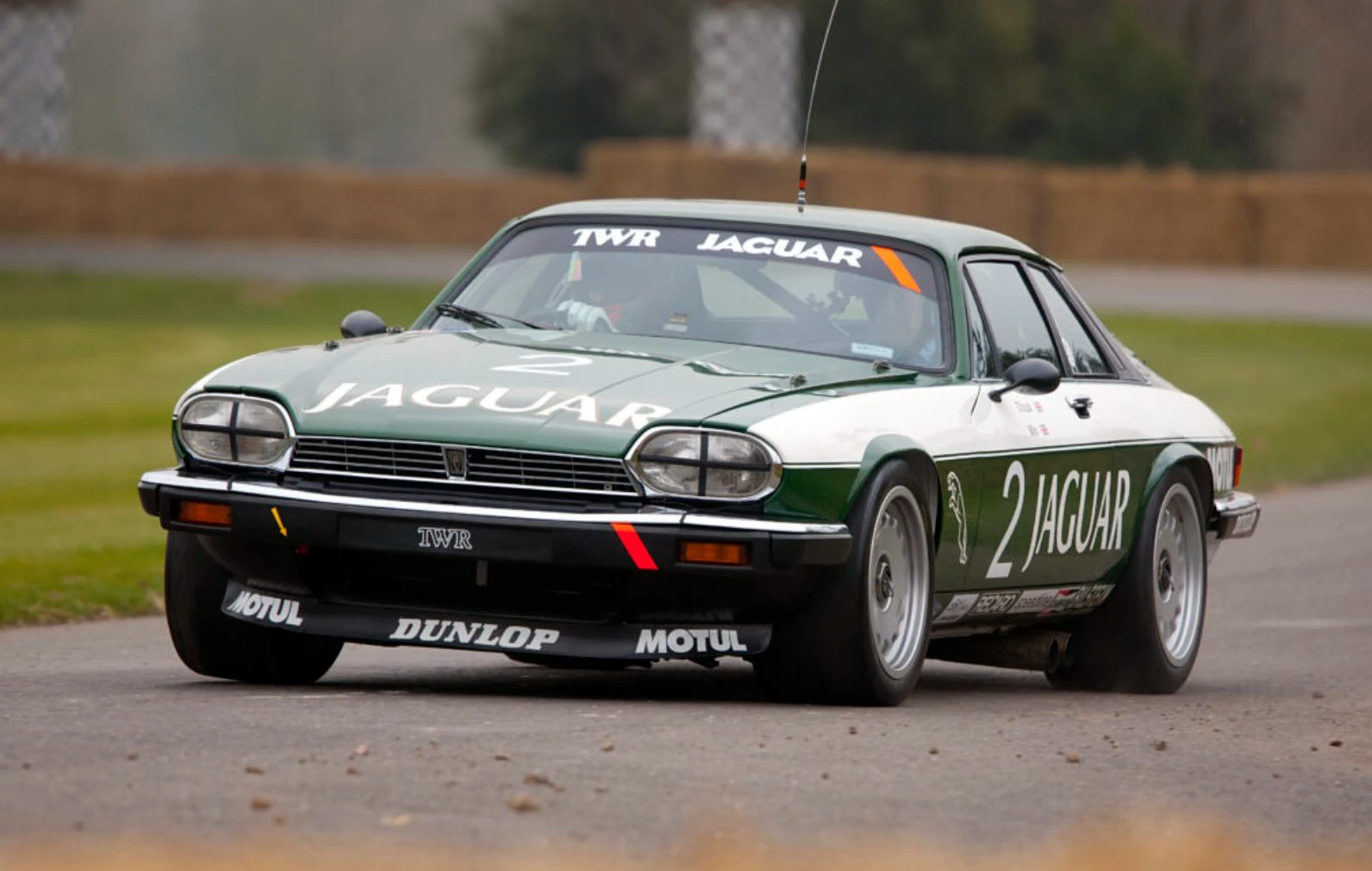
The TWR XJ-S at full chat — the Group A car in its element
Egan says yes
Fast-forward to 1981. Jaguar is free of the British Leyland nightmare, John Egan is in charge, and he believes a successful return to motor racing is the best way to re-establish the marque’s identity. It must have been some presentation: barely a handful of years after the XJ12C’s humiliating withdrawal, Jaguar was going back — with the very car Ralph Broad had wanted to race all along. Walkinshaw had raced against the XJC in a BMW CSL, so he knew better than most what it could do; one can only imagine Broad’s bitter gall.
TWR set about learning everything it could from the Broadspeed failure — a post-mortem on a failed V12 engine, and a proper study of one of the old cars. Group A would be kinder ground: a 1,400kg maximum, some 300kg less than the XJC had carried, real freedom over transmission and brakes, and tyres that, though smaller, remained more than adequate. The snag was the old enemy. Oil surge was the V12’s Achilles heel; Broadspeed had got to its dry sump too late, and Group A banned dry sumps altogether. So TWR simply did the work instead.
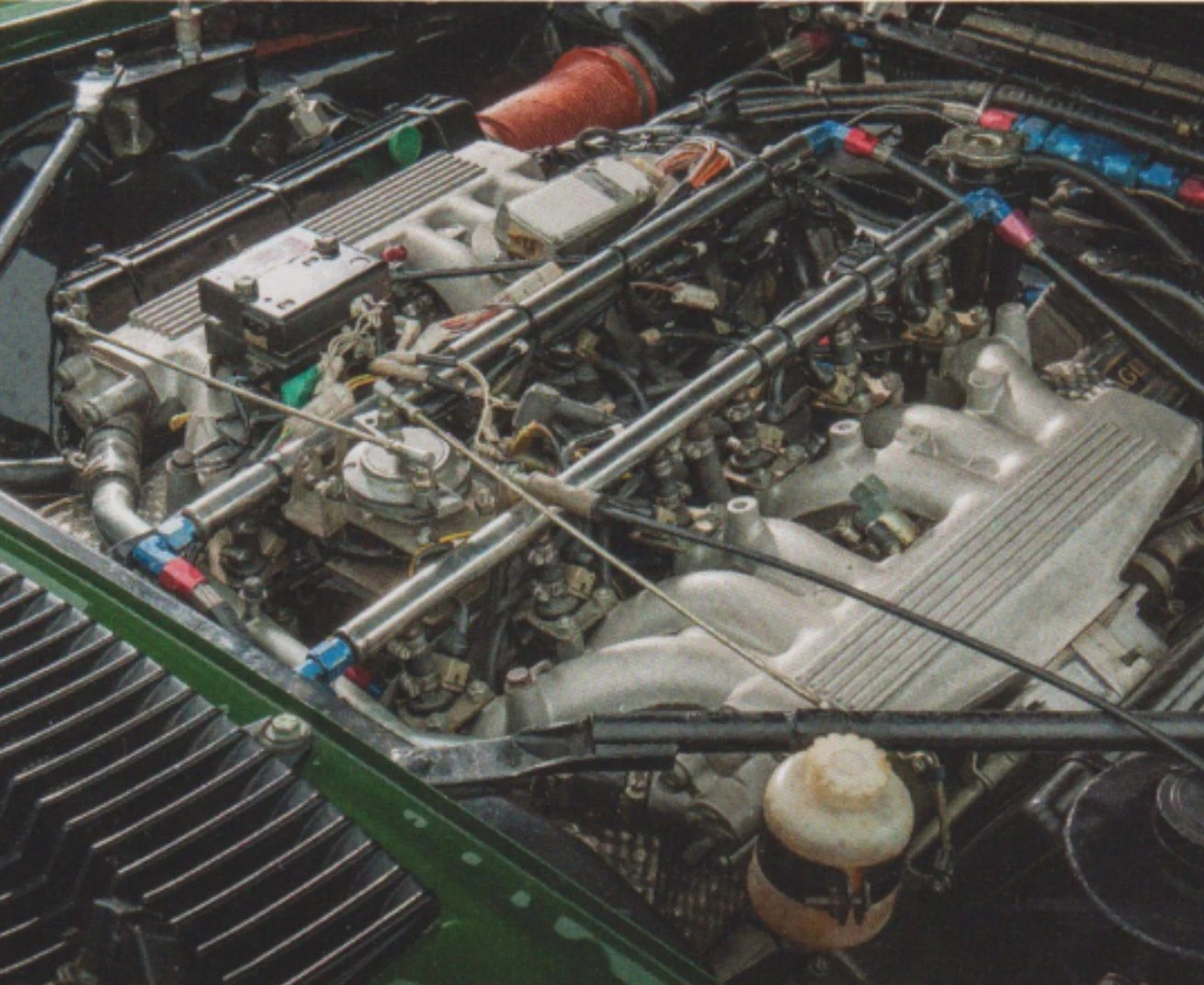
Under the bonnet: the 5.3-litre V12, its racing plenum and braided lines
Learning fast: 1982
The car Jaguar handed over was a fully trimmed, road-legal XJ-S — TWR001 — which the team walked through homologation while adding the racing essentials: single wheel nuts, compressed-air jacking, and the unglamorous engineering that would keep oil where it belonged. Sponsorship came from Motul and Akai, tyres from Dunlop. Debuted in the 1982 ETCC at Monza, the XJ-S started from the front row, won its third outing (a non-championship race at Zolder), then its first championship round at Brno, and another at the Nürburgring before the year was out. Better still, at Silverstone two XJ-Ss finished first and second — Jaguar’s first Tourist Trophy victory since 1951 — and that, as much as anything, persuaded Jaguar to make the programme official. By the time the works backing was confirmed in 1983, the wolf had already shown its teeth.
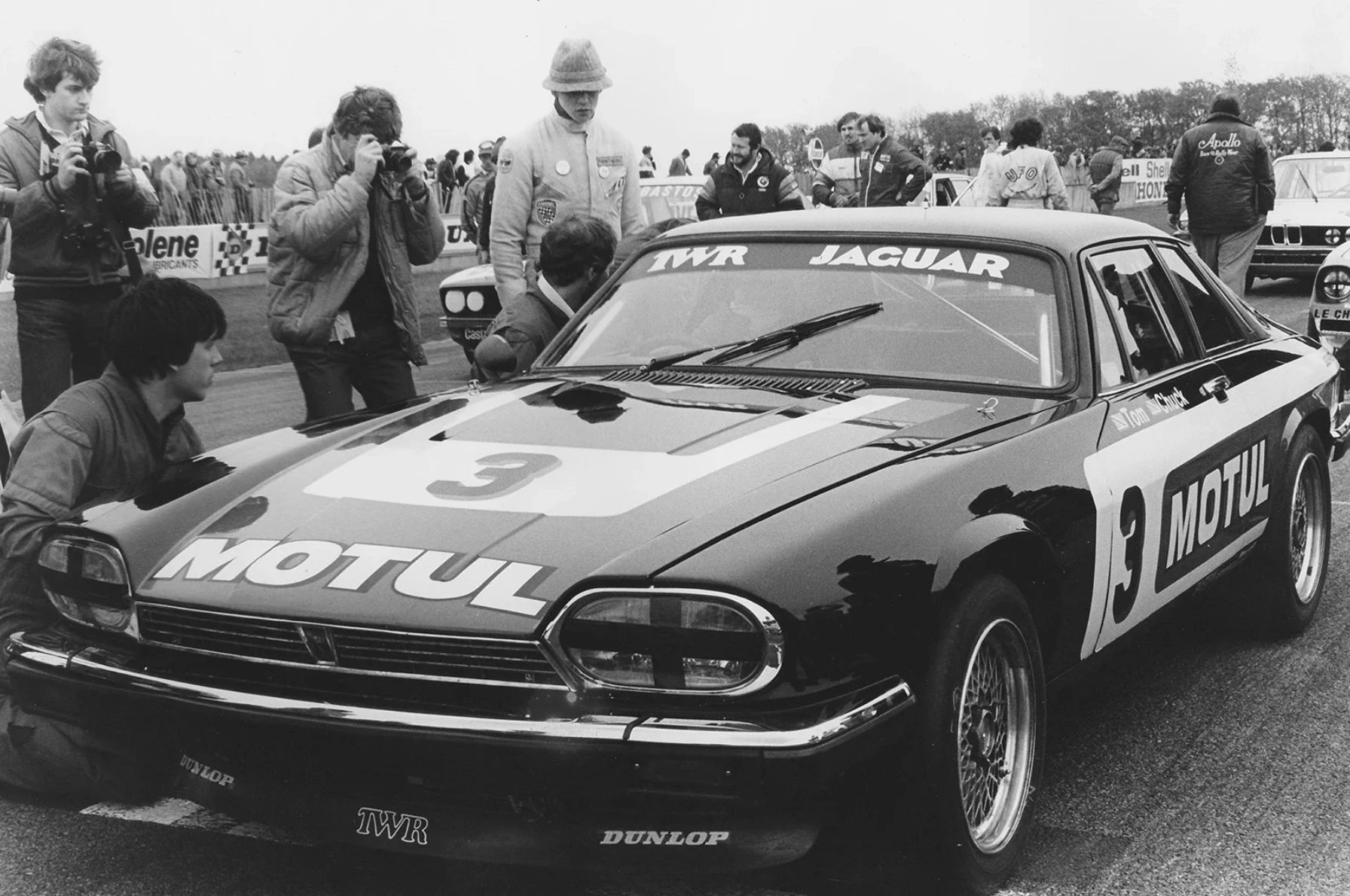
In period: the Motul-liveried XJ-S in the pits, Walkinshaw’s name on the door
So near, and yet
“Now that was a great car,” is Win Percy’s verdict, and his memories explain why. Tom kept much of the car as standard as possible — no power steering, no power brakes — “because without them there were two fewer things to go wrong”. Even so, this was a car you had to grab: “If you drove it at 85–90 per cent it wasn’t nice at all. It wanted to catch you out, throw you off the track. But at 100 per cent it was something else.” Percy’s party trick came at Brno, where a 150mph curve sweeps into the hairpin: “I could place the car so accurately I was stripping paint off the wheel arch on the Armco without realising.”
The 1983 season was a blend of brilliance and bad luck — wins at Enna, Brno, Zeltweg and Salzburg — but Jaguar still arrived at the final round, at Zolder, with a mathematical shot at the title. It was not to be: Dieter Quester kept his BMW ahead and carried the crown back to Munich.
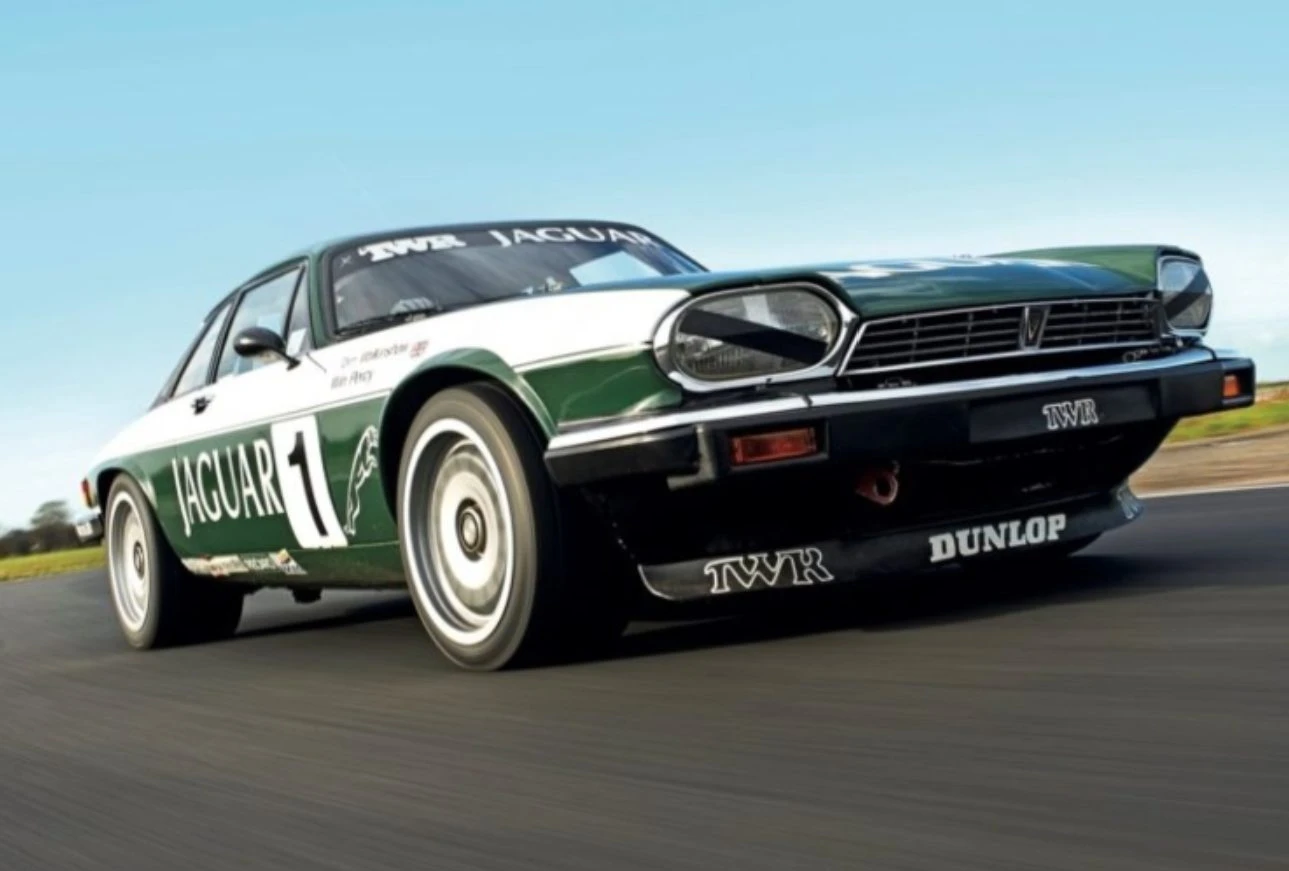
At speed: the championship-winning Jaguar in mid-race pursuit
1984: champion at last
There were to be no such mistakes in 1984. With a much modified car, the Jaguars were the class of the field — nine wins from the twelve ETCC rounds — and the best of them came at Spa. Walkinshaw, Hans Heyer and Percy qualified the XJ-S on pole and won the 24 Hours: Jaguar’s first race against the clock since the D-type’s Le Mans victory of 1957. The championship followed, fittingly going to Walkinshaw himself, shared with Heyer and Percy in chassis TWR JC/84A-007 — this very car, now cared for by the Jaguar Daimler Heritage Trust. The point had been proven; Walkinshaw adjusted his sights to Le Mans.
What it’s like to drive
Frankel drove this very car for Octane, at Blyton Park, strapped into the original Recaro — its red fireproof cloth faded pink and stained, he notes, with Walkinshaw’s sweat. Winding the 500bhp V12 out to 6,000rpm floods the cockpit with a brittle, frantic howl; the five-speed racing Getrag shifts light and fast through tightly stacked ratios; and although the donor car was a contemporary of the XJ12, it feels a dozen years younger — taut, lithe and eager for more. Under full power the tail sits almost imperceptibly out of line, the thing is allergic to understeer, and you could happily drive it all day, chipping away at it. “I probably wasn’t even in Win’s 85 per cent zone,” Frankel admitted. “It felt superb.” He’d watched #007 retire uncharacteristically from Silverstone’s Stow corner in the 1984 Tourist Trophy; driving it at last was, he wrote, a dream come true.
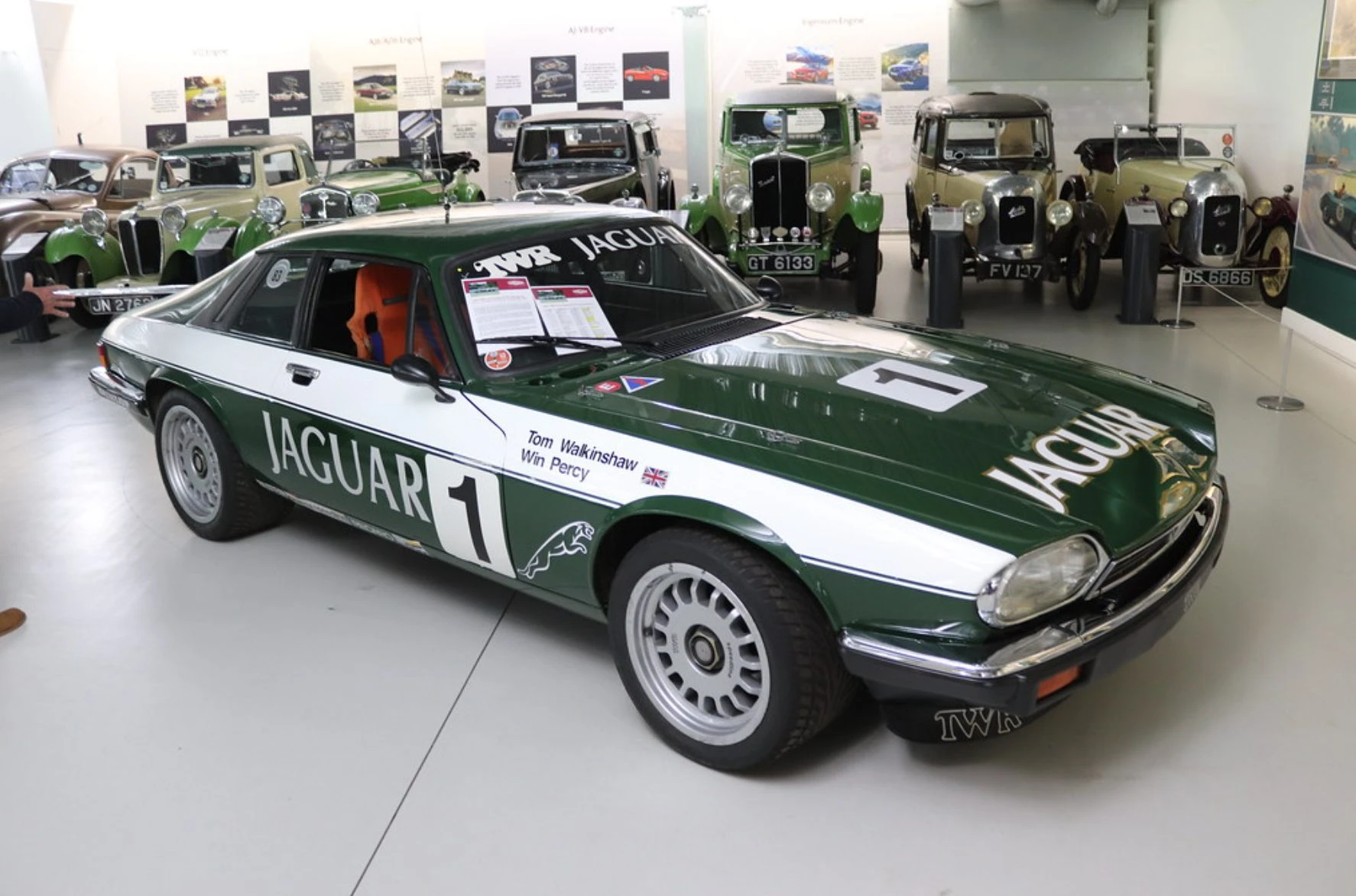
Champion today: the 1984 title-winning XJ-S, preserved for the nation
Why it matters to us
Because once again, the one component nobody ever blamed was Jaguar’s V12. Broadspeed proved it could outrun anything on track; TWR proved it could outlast a 24-hour race and win a championship with it. That is the standard we hold ourselves to at Building The Legend — from re-creating the XJ13 to the tera quad-cam V12 we engineer today at our workshop in Royal Leamington Spa, close to Coventry, and in the Classic Workshop, where we keep our customers’ cars true to that standard.
Broadspeed’s XJ12C was the fastest loser in the world. TWR’s XJ-S was the wolf that finally won — a championship, a Spa 24 Hours and, in Frankel’s sign-off, “a true breed apart”. Wild cats, indeed.